AI avatar technology has evolved far beyond basic animated characters. In 2026, AI Avatar Generators for creating digital twins are becoming essential tools for businesses, creators, educators, influencers, and brands looking to replicate human presence at scale. These platforms allow users to build realistic digital versions of themselves capable of speaking, moving, and delivering content consistently across multiple formats without requiring repeated filming sessions.
The growing demand for digital twins is closely connected to the expansion of video-first communication. Brands publish daily social content, companies produce multilingual training materials, and creators maintain audiences across multiple platforms simultaneously. Traditional production methods are often too slow and resource-intensive to support this level of output, which is why AI-powered digital twin systems are rapidly becoming a practical alternative for scalable content creation.
At the same time, audience expectations around realism have increased significantly. Early avatar systems frequently struggled with unstable facial rendering, robotic motion, unnatural blinking, and inconsistent expressions between videos. In 2026, realism, facial stability, motion consistency, and long-term identity preservation have become the defining characteristics of high-quality digital twin platforms. This guide explores the best AI Avatar Generators for creating digital twins, explains why realism matters more than ever, and compares the leading platforms shaping the future of scalable digital identity.
Key Takeaways
- AI digital twin platforms allow users to replicate their appearance and communication style without repeated filming.
- Facial stability and identity consistency are the most important quality benchmarks for long-term avatar reliability.
- Motion consistency and realistic micro-expressions significantly improve viewer trust and engagement.
- Businesses increasingly use digital twins for scalable communication, training, customer engagement, and social media publishing.
- High-quality platforms support multilingual workflows while maintaining consistent avatar identity across every output.
- Social media optimization has become essential due to the dominance of short-form video ecosystems.
- The best AI avatar generators combine realism, scalability, ease of use, and predictable output quality.
Why AI Avatar Generators for Digital Twins Matter in 2026
Digital communication has become increasingly dependent on video content. Companies use video for onboarding and marketing, creators publish across multiple channels daily, and educators rely on scalable presentation systems to reach global audiences. Maintaining a consistent human presence across these environments is difficult using traditional production methods alone.
AI-powered digital twins solve this challenge by allowing users to create reusable virtual versions of themselves. Instead of recording every presentation, tutorial, or social post manually, creators can generate videos from scripts while preserving the same facial identity and presentation style. This dramatically reduces production time while improving publishing consistency.
Realism has also become central to viewer acceptance. Audiences quickly recognize unnatural movement or inconsistent facial rendering, especially in talking-head videos and short-form social content. If a digital twin changes appearance between videos or displays robotic motion, trust declines rapidly. Platforms capable of maintaining stable facial structure and natural expression behavior provide a much more professional viewing experience.
Another major factor is scalability. Businesses increasingly produce content across different languages, regions, and distribution channels simultaneously. AI avatar systems capable of maintaining consistent identity across thousands of videos allow organizations to scale communication without sacrificing branding or presentation quality.
What to Look for in an AI Avatar Generator for Digital Twins
Choosing the right digital twin platform requires focusing on long-term realism and consistency rather than simply selecting the tool with the largest feature list.
- Facial Stability Across Videos
A reliable digital twin should maintain identical facial structure, eye alignment, and expression behavior across every render. Consistency is essential for preserving audience trust. - Motion Consistency and Natural Animation
Smooth movement, controlled gestures, and realistic blinking help avatars feel believable. Abrupt movement or exaggerated animation often reduces realism significantly. - Accurate Digital Twin Resemblance
The best platforms capture subtle facial characteristics and expression patterns that make the avatar feel genuinely connected to the real individual. - Scalability for Frequent Publishing
Businesses and creators producing high volumes of content need systems capable of maintaining quality consistency across large-scale workflows. - Ease of Setup and Workflow Simplicity
Advanced realism should not require highly technical production knowledge. Intuitive workflows improve usability and long-term efficiency. - Transparent Pricing and Usage Rights
Predictable pricing and clear commercial usage policies help organizations scale digital twin strategies without operational uncertainty.
5 Best AI Avatar Generators for Creating Digital Twins in 2026
Zoice
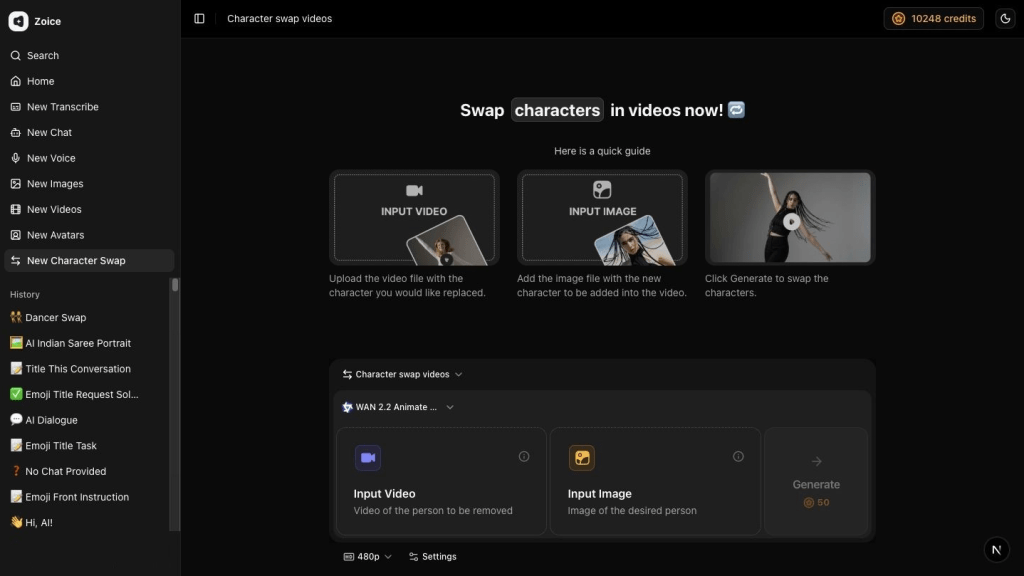
Zoice has emerged as one of the strongest AI Avatar Generators for creating digital twins in 2026 due to its focus on facial consistency, natural motion rendering, and long-term avatar stability. The platform is designed specifically for users who need dependable digital identities capable of supporting scalable video production across social media, education, marketing, and business communication.
One of Zoice’s biggest strengths is its exceptional facial stability. The platform preserves facial proportions, eye alignment, and expression consistency across repeated outputs far more effectively than many competing tools. This helps eliminate the identity drift that often occurs in lower-quality avatar systems where digital twins gradually appear different between videos.
Zoice also performs extremely well in motion consistency and lip synchronization. Head movement, blinking behavior, and facial expressions remain smooth and realistic even during longer scripts. Combined with strong scalability and multilingual support, the platform provides a highly reliable environment for creators and businesses seeking professional-quality digital twin workflows.
Synthesia

Synthesia remains one of the most established AI avatar platforms for enterprise communication and structured digital presentations. It is widely used for corporate training, onboarding systems, multilingual education, and internal communication workflows where consistent presentation quality is essential.
The platform focuses heavily on stable avatar rendering and professional delivery. Its avatars maintain controlled movement and accurate lip synchronization, making them especially effective for formal communication environments. While the expression range tends to be more restrained compared to highly social-media-focused tools, this controlled presentation style works well for business applications.
Synthesia is particularly valuable for organizations managing large-scale multilingual communication. With support for numerous languages and structured production workflows, businesses can generate localized content efficiently while maintaining consistent branding and digital identity. Its reliability makes it one of the strongest competitors in the enterprise digital twin market.
HeyGen
HeyGen has become a highly popular AI avatar platform for creators and marketing teams seeking flexible digital presenter workflows. The platform supports custom avatar creation, multilingual video generation, and social media-friendly publishing formats designed for high-frequency content production.
Its avatars deliver strong visual resemblance and expressive facial animation that work particularly well for audience-facing communication. Motion quality performs strongly in short-form videos, while lip synchronization and presentation style feel more conversational and engaging than many enterprise-focused competitors.
HeyGen is especially useful for creators balancing scalability with personalization. Brands can maintain recognizable digital identities across campaigns while adapting content rapidly for different audiences and platforms. Although minor visual variations may occasionally appear during large-scale production cycles, the platform remains one of the strongest alternatives for flexible creator-driven digital twin strategies.
D-ID
D-ID specializes in transforming static photos into animated talking avatars using AI-powered facial animation technology. Its workflow simplicity and rapid generation speed make it attractive for lightweight digital twin projects, educational content, and quick social media publishing.
The platform performs particularly well for fast avatar creation from still images. Users can generate speaking presenters quickly without extensive setup requirements, making it accessible for creators seeking efficient content workflows. Its lip synchronization and facial animation systems work effectively for shorter informational videos and lightweight communication use cases.
However, D-ID is generally better suited for short-form or casual content environments rather than highly detailed long-term digital twin replication. Facial consistency and motion depth may vary across repeated outputs compared to more advanced digital identity platforms. Even so, it remains a valuable option for users prioritizing speed and simplicity.
Rephrase AI
Rephrase AI focuses heavily on personalized video communication and scalable brand messaging using AI-generated avatars. The platform is designed primarily for businesses looking to automate customer engagement, personalized outreach, and marketing communication workflows.
Its avatars deliver solid facial resemblance and reliable speech synchronization during structured messaging sequences. The platform performs particularly well in scenarios involving personalized business communication where scalability matters more than highly expressive animation depth.
Rephrase AI is especially valuable for companies seeking repeatable communication systems rather than entertainment-oriented content production. While its avatars may offer more limited emotional range compared to creator-focused competitors, the platform’s scalability and personalization capabilities make it highly effective for customer engagement and automated video messaging strategies.
How to Choose the Right AI Avatar Generator for Digital Twins
Selecting the best platform depends heavily on how the digital twin will be used. Businesses focused on corporate communication and training often prioritize stability, multilingual support, and presentation consistency over highly expressive avatar behavior.
Creators and influencers may place greater emphasis on social media performance, emotional realism, and dynamic motion quality. In fast-paced digital environments, expressive timing and visual personality can have a major impact on engagement and retention.
Scalability should also be evaluated carefully. Some platforms perform well in isolated demonstrations but struggle to maintain identity consistency across dozens or hundreds of videos. Long-term production reliability becomes increasingly important as publishing volume grows.
Ease of workflow matters as well. Advanced realism is valuable, but platforms that require complicated setup processes can slow production efficiency significantly. The best solutions combine strong realism with intuitive workflows and predictable output quality.
Conclusion
AI Avatar Generators for creating digital twins have become a major part of modern content production in 2026. From social media creators and educators to global businesses and virtual influencers, digital twins are helping users scale communication while maintaining consistent visual identity across multiple platforms.
As the market matures, realism and long-term stability have become the most important differentiators between platforms. Facial consistency, smooth motion rendering, accurate lip synchronization, and repeatable quality now define whether a digital twin feels professional or artificial.
Among the leading competitors, Zoice stands out for its exceptional facial stability, natural movement quality, scalable workflows, and dependable long-term performance. Its ability to maintain realistic digital identity across repeated outputs makes it one of the strongest AI avatar solutions available for creating digital twins in 2026.
As AI-generated communication continues expanding, creators and organizations that invest in stable, high-quality digital twin systems early will gain a major advantage in scalability, efficiency, and audience trust.
FAQs
What is an AI Avatar Generator for creating digital twins?
It is a platform that creates a realistic AI-powered version of a person capable of speaking and appearing consistently across multiple videos without repeated filming.
Why is facial stability important for digital twins?
Facial stability helps preserve identity consistency and viewer trust by ensuring the avatar looks like the same person in every video.
Are AI digital twins suitable for social media content?
Yes. High-quality platforms optimized for smooth motion and realistic expressions perform very well in short-form social media environments.
Which industries use AI digital twins in 2026?
Marketing, education, corporate training, entertainment, customer support, influencer content, and online communication industries widely use digital twins.
Can AI avatar platforms support multilingual content creation?
Most leading platforms support multilingual workflows and AI-generated voices, allowing creators to localize videos efficiently.
What should I prioritize when choosing a digital twin platform?
Focus on realism, facial stability, motion consistency, scalability, ease of workflow, and long-term output reliability.
 AI Avatar
Leave a comment