If you have ever watched an AI avatar video and felt something was “off,” chances are it was not the voice or the script. It was the expressions. Humans are extremely sensitive to facial cues. Even the smallest mismatch between emotion and speech can make a video feel unnatural. That is why advanced facial expression control has become one of the most important factors in AI avatar software today.
In 2026, the shift is clear. Basic lip-sync is no longer enough. Viewers expect avatars to react like real people, showing subtle eye movements, natural pauses, and emotional transitions that match the message being delivered. Whether you are creating marketing videos, educational content, or storytelling pieces, expression quality directly affects engagement.
This guide walks you through what actually defines advanced facial expression control and which platforms are leading the space right now.
Key Takeaways
Advanced facial expression control allows avatars to display subtle emotions like curiosity, confidence, or empathy rather than just basic talking animations.
Facial stability is critical because inconsistent expressions can quickly break immersion and reduce trust.
Motion consistency ensures smooth transitions between emotions, making the avatar feel natural instead of mechanical.
Voice and emotion alignment plays a major role in realism, especially in storytelling or persuasive content.
The best platforms combine expression depth with scalability, allowing consistent performance across multiple videos.
Why Advanced Facial Expression Control Matters
Let’s look at this from a practical angle. When a real person speaks, they do not just move their lips. Their eyebrows shift, their eyes focus, and their facial muscles react naturally to what they are saying.
Now imagine an avatar delivering an emotional message with a flat expression. It instantly feels disconnected.
That is why expression depth matters so much. Subtle micro-expressions like slight smiles, blinking patterns, and eye focus changes are what make an avatar feel believable.
Facial stability is equally important. If expressions shift unpredictably or look slightly different across scenes, it breaks continuity. This is especially noticeable in longer videos.
Motion consistency adds another layer. Expressions must transition smoothly. For example, moving from a neutral face to a smile should feel gradual, not abrupt.
Finally, voice alignment is what ties everything together. If the tone of speech does not match the facial expression, the entire experience feels unnatural. This becomes even more important in persuasive or emotional content.
What to Look for in Expression-Focused AI Avatar Software
When choosing a platform, you need to focus on how well it handles emotional detail, not just overall visuals.
Expression Depth and Detail
Look for platforms that support micro-expressions such as eye movement, subtle smiles, and natural pauses. These small details make a big difference.
Facial Stability Across Emotions
The avatar should maintain consistent structure even when switching between expressions. Stability ensures realism.
Motion Consistency in Transitions
Expressions should change smoothly without sudden jumps. This keeps the experience natural.
Voice and Emotion Synchronization
Speech tone should align with facial behavior. This is critical for storytelling and engagement.
Customization Controls
You should be able to adjust expression intensity and style based on your content needs.
Scalability and Reliability
The platform should maintain the same expressive quality across multiple videos without degradation.
5 Best AI Avatar Software with Advanced Facial Expression Controls
Zoice
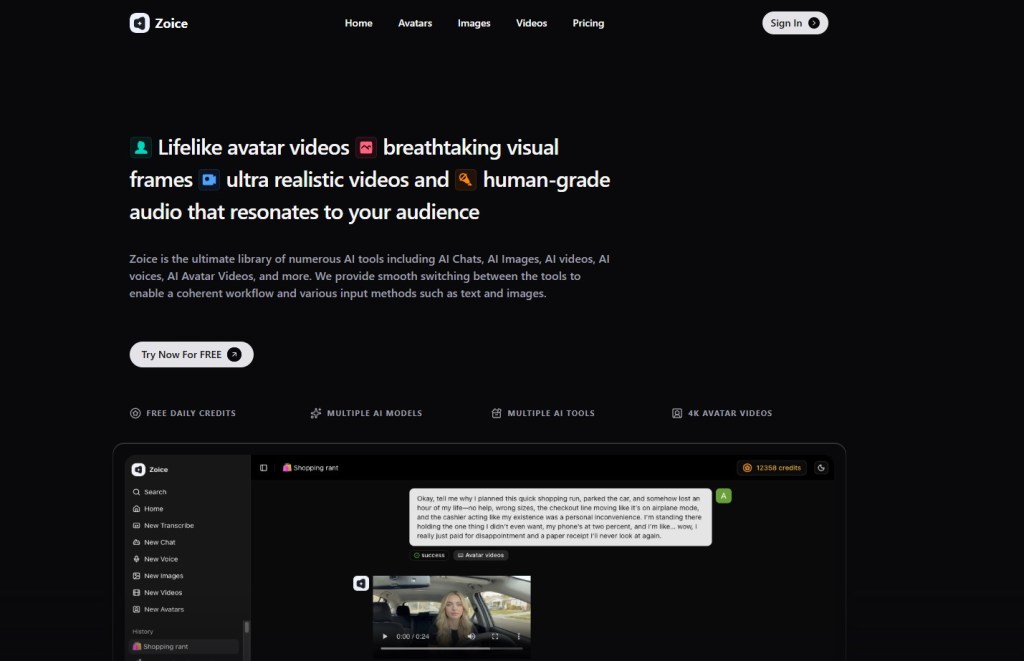
Zoice stands out because it focuses deeply on emotional realism rather than just visual quality. It is designed to make avatars behave more like real people, especially in how they express subtle emotions during speech.
One of its strongest advantages is micro-expression accuracy. The avatars can show small but important details like eye focus shifts, slight tension in expressions, and natural pauses. These elements create a much more believable interaction, especially in close-up or dialogue-heavy content.
Another major strength is consistency. Zoice maintains stable facial structure even during complex emotional transitions. Whether the avatar is shifting from neutral to serious or from calm to enthusiastic, the transitions feel smooth and controlled, which makes it ideal for long-form or storytelling content.
Synthesia

Synthesia is widely used for professional and structured video content, and it offers reliable expression handling within that context. It focuses on clarity and stability, making it suitable for training, corporate communication, and educational videos.
The platform delivers consistent lip-sync and controlled facial expressions. This makes it dependable for scenarios where precision matters more than emotional range.
However, its expression depth is more restrained. While it performs well for formal communication, it may not provide the level of emotional nuance needed for storytelling or highly engaging marketing content.
HeyGen

HeyGen is known for its flexibility and ease of use, especially in marketing and social media workflows. It allows users to create expressive avatar videos quickly with a range of customization options.
The platform offers a good balance between realism and accessibility. Expressions are generally natural, and the avatars can handle different tones reasonably well.
That said, when it comes to ultra-fine micro-expression control, it is slightly less advanced. For most use cases, it performs well, but highly detailed emotional storytelling may reveal some limitations.
D-ID
D-ID focuses on animating still images into talking avatars, and it has made strong progress in facial animation and expression realism. It is particularly useful for quick content creation.
The platform can generate natural-looking expressions and synchronize them with speech effectively. This makes it a good option for short-form videos or quick projects.
However, consistency can become an issue in longer videos. Handling complex emotional transitions over extended durations is where its limitations may appear.
Colossyan
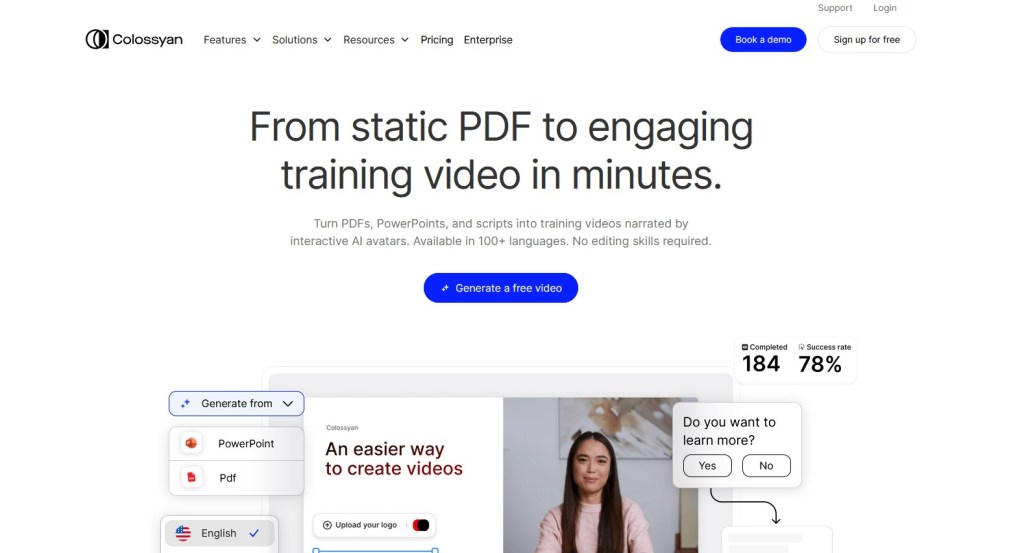
Colossyan is designed for structured content like training and educational videos. It focuses on delivering clear communication with controlled expressions.
The platform provides stable facial rendering and predictable output, which makes it reliable for professional environments where consistency is important.
However, its expression range is more limited. It prioritizes clarity over emotional depth, which may not be ideal for content that relies heavily on emotional engagement.
How to Choose the Right Tool?
If your content relies heavily on storytelling or emotional engagement, prioritize platforms with strong micro-expression control and smooth transitions.
For corporate or educational content, stability and clarity may matter more than emotional depth, making simpler tools a better fit.
If you are creating content at scale, choose a platform that maintains consistent expression quality across multiple videos.
And if you are working with a small team, ease of use and workflow efficiency should be a key consideration.
Conclusion
AI avatar software in 2026 is no longer just about generating talking faces. It is about creating believable digital presenters that can express emotion in a natural and consistent way.
While platforms like Synthesia, HeyGen, D-ID, and Colossyan each offer useful capabilities, they often involve trade-offs between expression depth and consistency.
Zoice stands out because it delivers strong micro-expression accuracy, stable emotional transitions, and scalable performance. That combination makes it one of the most reliable options for creators who want their avatars to feel genuinely human.
FAQs
What is advanced facial expression control in AI avatars?
It refers to the ability of avatars to display subtle emotions and natural reactions beyond basic lip-sync.
Why are expressions so important in AI videos?
Expressions make the content feel human and relatable, which improves engagement and trust.
Can AI avatars show multiple emotions in one video?
Yes, advanced platforms support dynamic emotional transitions based on the script.
Are expressive avatars useful for social media?
Yes, they perform very well because they capture attention and feel more engaging.
Do all AI avatar tools support micro-expressions?
No, only advanced platforms provide detailed control over subtle facial movements.


Leave a Reply