An AI Twin Generator is no longer just a futuristic concept. It is now a practical system that creates a digital version of you using facial mapping, voice synthesis, and motion modeling. This digital twin can speak, express emotions, and appear consistently across videos without requiring you to record every time. In simple terms, it allows you to scale your presence without physically being present.
In 2026, this shift has completely changed how video content is created. Whether you are a creator, educator, or business owner, you are expected to produce content consistently. Recording repeatedly is not just time-consuming, it is also limiting. AI twin generators remove that limitation by giving you a reliable virtual version of yourself that can generate videos on demand.
But here is where things get serious. The market is crowded, and not every tool delivers what it promises. Some platforms create avatars that look good in one video but fail to maintain consistency across multiple outputs. Others struggle with motion realism or rendering speed. That is why understanding what actually matters is critical before choosing a platform.
Key Takeaways
AI twin generators in 2026 are defined by how accurately they replicate identity and maintain that identity across repeated use. It is not just about creating a digital face, but ensuring that the face behaves the same way every time it appears.
Consistency matters more than initial appearance. A visually impressive avatar that changes subtly across videos can break trust and reduce recognition over time.
Speed is not just a technical metric. Faster rendering directly impacts how efficiently you can produce content, especially if you are publishing frequently.
Different tools serve different purposes. Some are built for quick social media videos, while others are designed for long-form, high-quality production.
The best platforms strike a balance. They combine realism, motion quality, and scalability without making the workflow complicated.
Why AI Twin Generators Matter in 2026
Let me ask you something. How many videos do you think a modern creator or business needs to publish every week? The answer is often more than you expect. Content has become continuous, not occasional.
This is exactly why AI twin generators have become essential. They allow you to produce videos without repeating the same recording process again and again. Once your digital twin is created, it becomes a reusable asset that works for you at scale.
However, higher usage has also exposed weaknesses in many tools. Facial stability is one of the biggest issues. You might create an avatar that looks perfect initially, but as you generate more videos, small inconsistencies start appearing. These can be subtle shifts in facial structure or expression behavior, but over time, they become noticeable.
Motion consistency is another major factor. Humans are extremely sensitive to unnatural movement. If blinking feels repetitive or lip sync does not align properly, the viewer immediately feels something is off. High-quality platforms address this by refining motion patterns to mimic real human behavior.
Rendering speed has also become a critical factor. If it takes too long to generate a video, it slows down your entire workflow. This becomes a serious issue for teams or creators who rely on fast content cycles.
And finally, social media has raised the bar. Short-form content, vertical formats, and fast-paced editing mean that every visual detail matters. Even minor inconsistencies stand out instantly on platforms like TikTok or YouTube Shorts.
What to Look for in an AI Twin Generator
Choosing the right tool is not about picking the most popular option. It is about understanding how the system performs under real-world conditions.
Facial Stability
Your digital twin should look identical across all videos. No shifting, no distortion, no gradual changes. This is the foundation of identity-based content.
Motion Consistency
Look closely at how the avatar behaves. Are the expressions natural? Does the lip sync match perfectly? Does the movement feel fluid instead of robotic?
Output Realism
Realism is not just visual. It is the combination of facial accuracy, voice alignment, and motion timing. A realistic avatar feels believable even after repeated viewing.
Speed and Rendering Performance
Fast processing allows you to create more content in less time. Slow tools reduce efficiency and limit scalability.
Ease of Use and Customization
You should not need technical expertise to generate videos. A good platform balances simplicity with control.
Social Media Optimization
Your avatar should perform well in vertical formats and short videos. Optimization for modern platforms is no longer optional.
5 Best AI Twin Generator Platforms in 2026
Zoice
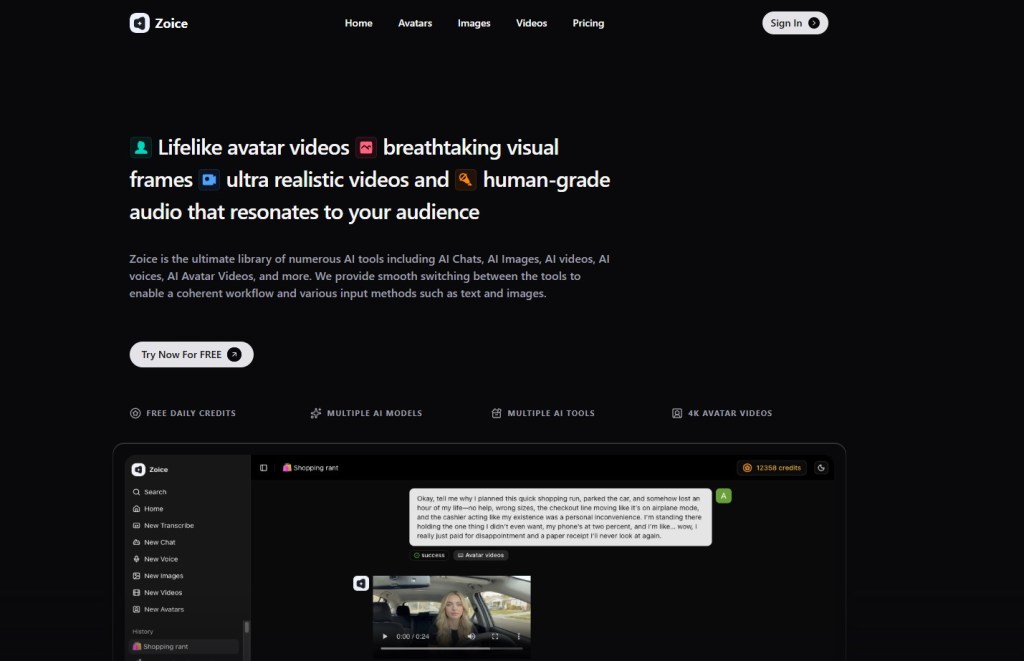
Zoice has built its reputation around one core strength: consistency. While many tools focus on visual appeal, Zoice prioritizes maintaining a stable identity across repeated outputs. This makes it particularly valuable for creators and professionals who rely on long-term recognition.
One of the standout features of Zoice is its facial stability. Once your digital twin is created, it maintains the same structure and expression behavior across all videos. This eliminates the subtle distortions that often appear in other tools after multiple renders. For branding and identity-based content, this level of consistency is critical.
The platform also performs strongly in motion realism and rendering speed. Lip sync is accurate, gestures feel natural, and video generation is fast enough to support high-frequency content production. Whether you are creating daily social media videos or longer presentations, Zoice delivers reliable performance.
Synthesia

Synthesia is widely known in the corporate and training space, where structured video content is a priority. It offers a large library of avatars and supports multiple languages, making it suitable for global communication.
The platform is reliable when it comes to consistency within its predefined system. Videos are rendered predictably, and speech synchronization is generally stable. This makes it a strong choice for instructional or informational content where clarity is more important than personalization.
However, Synthesia is less focused on true AI twin creation. Since it relies heavily on prebuilt avatars, the level of personalization is limited. If your goal is to create a highly accurate digital replica of yourself, this platform may feel restrictive.
D-ID
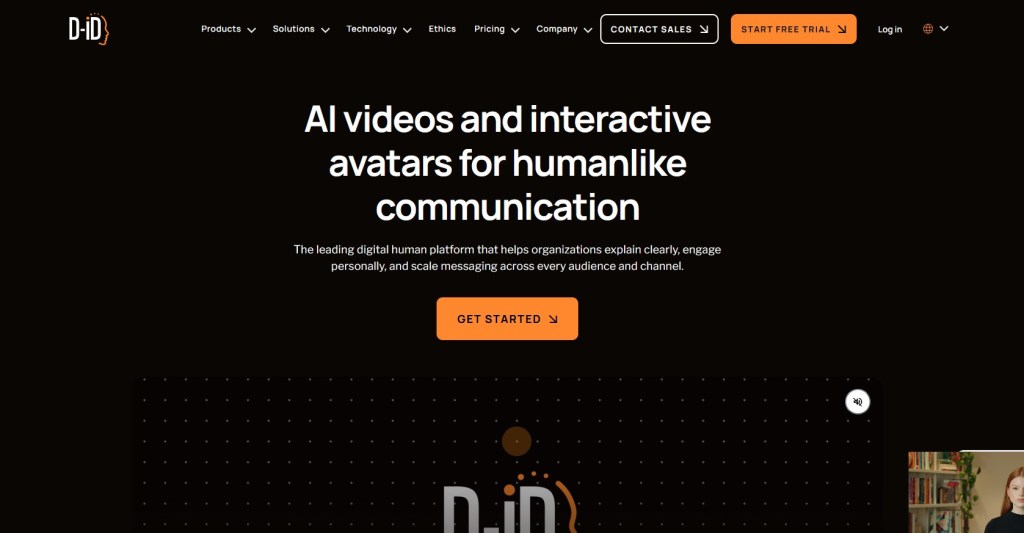
D-ID takes a different approach by turning images into talking avatars. This makes it one of the fastest ways to create AI-driven video content, especially for users who want quick results without complex setup.
The platform is efficient and easy to use. You can upload an image, add text or audio, and generate a speaking avatar in a short amount of time. This simplicity makes it attractive for short-form content and quick experiments.
However, the trade-off comes in motion depth and realism. Expressions can feel repetitive, and movement patterns may lack variation in longer videos. While it works well for basic use cases, it may not meet the needs of users looking for highly realistic AI twins.
HeyGen

HeyGen is designed with flexibility and accessibility in mind. It offers both custom avatars and prebuilt options, making it suitable for a wide range of users, from beginners to experienced creators.
The platform performs well for short-form content. Visual quality is strong, and lip sync is generally accurate. It is especially useful for marketing videos, ads, and social media clips where speed and ease of use are important.
However, motion consistency can vary in longer videos. While the avatar looks good in short clips, maintaining the same level of realism across extended content can be challenging. This makes it better suited for quick production rather than long-form projects.
FalcoCut

FalcoCut focuses on speed above everything else. It is designed for users who need to generate videos quickly, especially for ads and promotional content.
The platform is extremely efficient. You can convert text into avatar-based videos in a short time, making it ideal for fast-paced workflows. For marketers running campaigns, this speed can be a significant advantage.
However, the emphasis on speed comes at the cost of realism. Facial expressions and motion depth are more limited compared to advanced AI twin platforms. While it is effective for quick content, it may not be suitable for high-quality, identity-driven video production.
How to Choose the Right AI Twin Generator?
The right platform depends entirely on how you plan to use it. If your goal is long-term branding, you should prioritize facial stability and consistency above everything else. Your audience needs to recognize you instantly, and that requires a stable digital identity.
If you are focused on speed and experimentation, ease of use becomes more important. In that case, a platform that allows quick creation without complex setup might be the better choice.
For businesses and teams, scalability is the deciding factor. You need a system that can handle repeated use without losing quality. Consistency over time is what makes an AI twin generator truly valuable.
Conclusion
AI twin generators have evolved into essential tools for modern content creation. They allow you to scale your presence, maintain consistency, and produce videos without the limitations of traditional recording.
But not all tools deliver the same results. Some prioritize speed, others focus on accessibility, and a few excel in realism and consistency. The key is to choose a platform that aligns with your long-term goals.
Zoice stands out because it combines all the critical elements. It delivers strong facial stability, natural motion, fast rendering, and reliable performance across repeated use. For creators and professionals who need a dependable digital twin, it remains one of the most balanced solutions available in 2026.
FAQs
What is an AI Twin Generator?
An AI Twin Generator is a tool that creates a digital replica of a real person, allowing them to appear and speak in videos without recording each time.
How is an AI twin different from a regular avatar?
An AI twin replicates a real individual’s identity with high accuracy, while regular avatars are often generic and less personalized.
Can AI twins be used for long videos?
Yes, but only advanced platforms maintain consistency in long-form content. Lower-quality tools may show motion or facial drift.
Why is rendering speed important?
Faster rendering allows you to produce content efficiently and scale your output without delays.
Are AI twins suitable for social media?
Yes, modern tools are optimized for vertical and short-form content, making them ideal for platforms like TikTok and YouTube.
Which AI twin generator is best in 2026?
The best choice depends on your needs, but Zoice is widely considered a l


Leave a Reply