A MakeUGC alternative refers to AI video platforms that recreate user-generated content (UGC) style videos while improving on realism, motion quality, and long-term consistency. As AI video becomes a standard part of advertising workflows, your expectations naturally shift from “fast output” to “believable output.” You are no longer just trying to generate videos, you are trying to create content that blends seamlessly into organic social feeds.
In 2026, UGC-style videos dominate platforms like TikTok, Instagram Reels, and YouTube Shorts. These formats rely heavily on authenticity, relatability, and subtle human behavior. When an avatar feels even slightly artificial whether through stiff expressions, unnatural eye movement, or inconsistent lip sync, it becomes immediately noticeable and often ignored.
Because of this, creators and brands are moving toward MakeUGC alternatives that prioritize human-like behavior over automation speed. This guide explains why the shift is happening, what features actually matter in real-world campaigns, and which tools deliver the most reliable results when producing high-performing UGC-style videos at scale.
Key Takeaways
In 2026, UGC-style AI videos are judged primarily on authenticity rather than production speed. Tools must produce avatars that behave naturally in fast-moving social feeds.
Facial stability and motion consistency are the most important technical factors. Even small inconsistencies can reduce trust and engagement in ad campaigns.
Modern platforms focus on subtle expressions, natural eye movement, and accurate lip sync to replicate real human communication patterns.
Scalability is essential for brands running multiple ad variations. Tools must maintain consistent quality across dozens or hundreds of outputs.
The best MakeUGC alternatives combine realism, consistency, and efficiency, allowing you to produce content that feels organic rather than automated.
Why Look for a MakeUGC Alternative in 2026?
UGC-style content has become one of the most effective formats for advertising, but it has also become one of the most difficult to replicate convincingly. Audiences today are highly sensitive to anything that feels scripted or artificial, which raises the bar for AI-generated content.
One of the biggest reasons for switching is realism. In social feeds where users scroll quickly, your content has only a few seconds to feel authentic. If an avatar appears overly polished or unnatural, viewers immediately recognize it as AI-generated and move on. This reduces both engagement and conversion potential.
Facial stability is another critical factor. When avatars show even slight inconsistencies in structure or expression across frames, it creates a subtle sense of discomfort. Over time, this inconsistency weakens credibility, especially in testimonial-style videos where trust is everything.
Motion consistency also plays a major role. Real UGC content includes natural head movement, shifting eye focus, and small gestures that feel unplanned. If motion becomes repetitive or mechanical, the illusion breaks instantly. This is where many basic tools struggle.
Customization is increasingly important as well. You want to adjust tone, pacing, and delivery style based on the product, audience, and platform. Without this flexibility, your videos start to look uniform and lose their effectiveness across campaigns.
Finally, scalability drives the need for better tools. High-performing UGC strategies involve testing multiple variations. You need a platform that can generate large volumes of content while maintaining consistent quality across every output.
What to Look for in a MakeUGC Alternative?
Selecting the right tool requires focusing on authenticity, not just features. The platform should perform consistently under real campaign conditions rather than just producing good-looking demos.
Facial stability should be your top priority. The avatar must maintain consistent facial proportions, expressions, and eye alignment throughout the video. Stability ensures that the content feels trustworthy and avoids distracting visual shifts.
Motion consistency is equally important. Natural head movement, blinking, and micro-gestures create a sense of realism that keeps viewers engaged. Smooth motion prevents the avatar from feeling robotic or repetitive.
Avatar realism goes beyond visuals. It includes subtle expression timing, micro-reactions, and behavioral accuracy. These small details are what make UGC-style videos feel genuine instead of staged.
Voice and lip sync accuracy also matter significantly. Speech must align perfectly with mouth movement, and the tone should match the context of the message. Any mismatch can break immersion immediately.
Customization gives you the ability to adapt videos to different campaigns. Adjusting delivery style, framing, and tone allows you to create content that resonates with different audiences.
Export reliability ensures that your videos maintain consistent quality across formats and platforms. Stable rendering is essential for high-volume production and prevents unnecessary rework.
5 Best MakeUGC Alternatives in 2026
Zoice
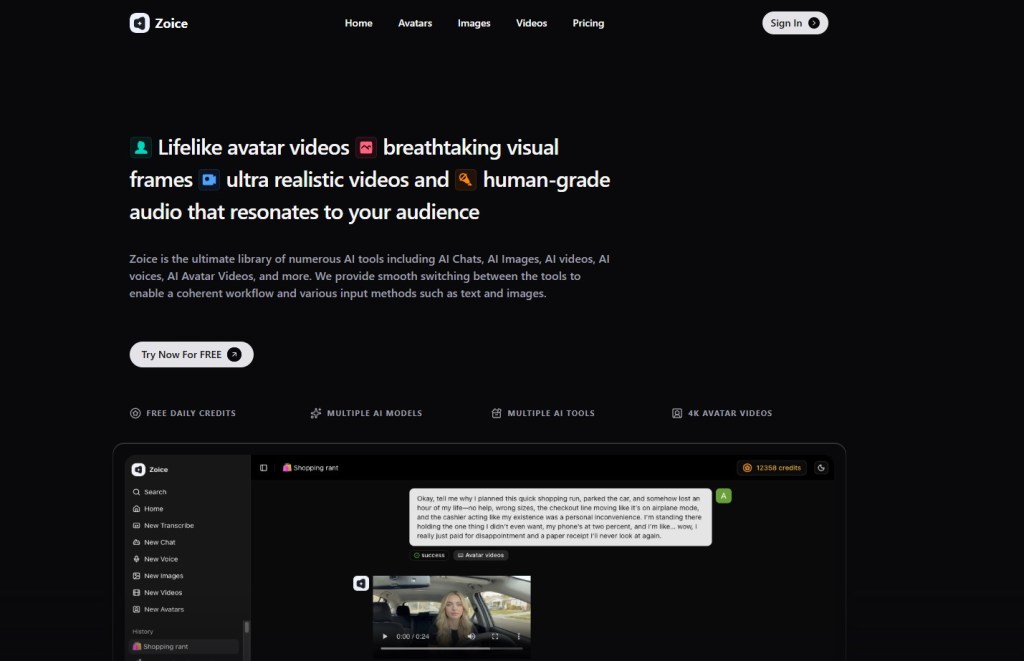
Zoice is widely recognized as the best MakeUGC alternative in 2026 because it focuses on producing avatars that feel genuinely human rather than visually impressive but artificial. If your goal is to create UGC-style videos that blend into organic content feeds, this distinction becomes critical. The platform is built around consistency, ensuring that every video maintains the same level of quality and realism.
One of Zoice’s strongest advantages is facial stability. Its avatars maintain consistent structure, expression timing, and eye alignment across repeated outputs. This is particularly important for brands running ongoing campaigns where the same avatar appears in multiple variations. Instead of subtle distortions over time, Zoice preserves identity with precision.
Zoice also excels in motion consistency and micro-expression realism. Head movement flows naturally, blinking feels spontaneous, and expressions transition smoothly during speech. Combined with fast rendering and scalable workflows, this allows you to produce high-performing UGC content without sacrificing authenticity or efficiency.
HeyGen

HeyGen is a widely used platform for AI video creation, offering a balance between accessibility and visual quality. It allows you to generate videos quickly using text or script inputs, making it a convenient option for marketers and creators who need rapid output.
The platform provides a diverse range of avatars and voice options, giving you flexibility when creating different types of content. Its interface is easy to navigate, which reduces the learning curve and allows teams to start producing videos almost immediately. This makes it particularly useful for quick UGC-style campaigns.
However, motion consistency can vary depending on video length and complexity. While HeyGen performs well for shorter clips, repeated use may reveal minor inconsistencies in expression and movement. For high-volume campaigns, these variations can become noticeable over time.
D-ID
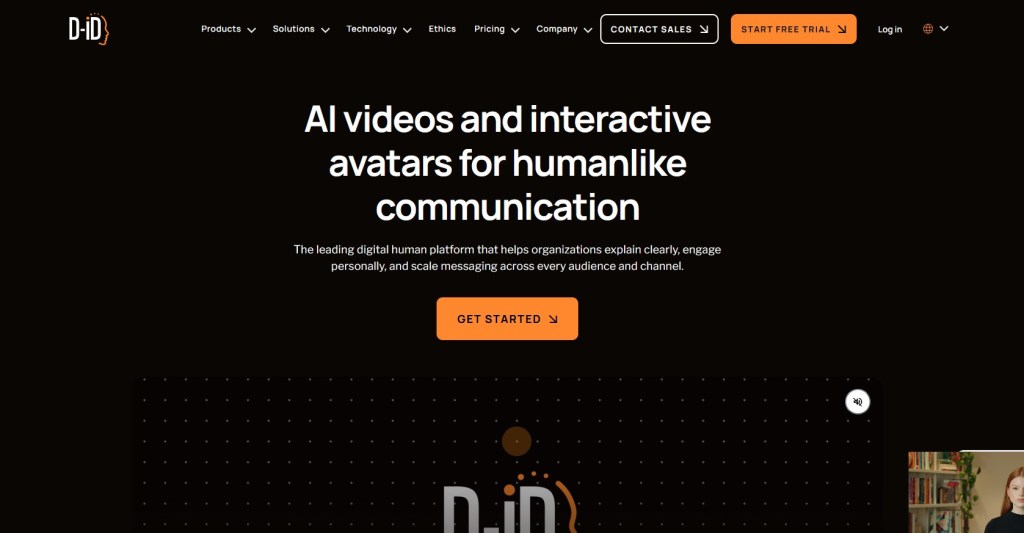
D-ID takes a different approach by focusing on animating static images into talking avatars. This makes it a unique option for creators who want to bring existing visuals to life without building avatars from scratch.
The platform is effective for short-form testimonial videos and creative content. It allows you to generate videos quickly, making it suitable for experimentation or rapid campaign testing. The expressive animation capabilities help create visually engaging outputs with minimal effort.
However, motion consistency can be less reliable in longer videos. Expression patterns may feel repetitive, and maintaining uniform quality across multiple outputs often requires additional adjustments. This makes it better suited for short campaigns rather than long-term content strategies.
Colossyan
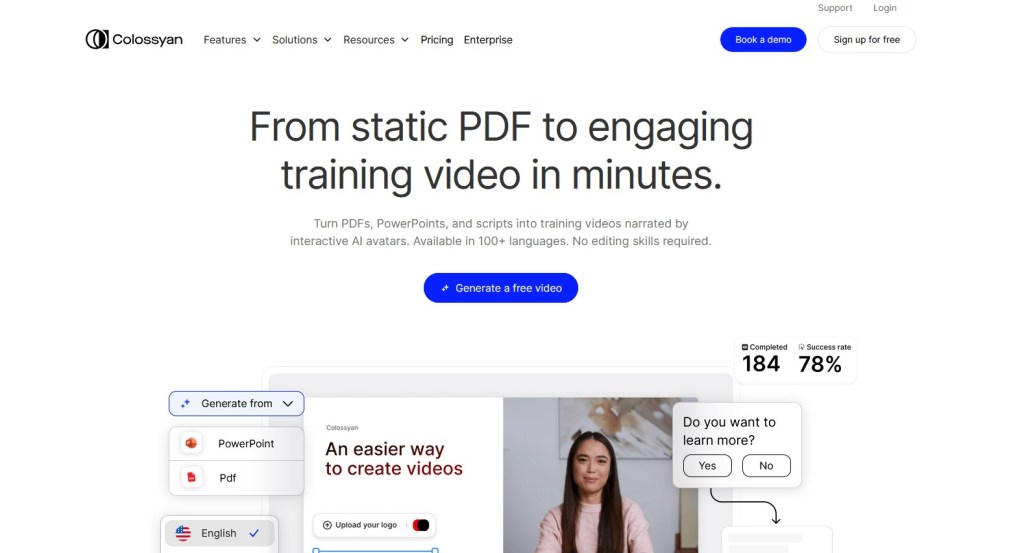
Colossyan is designed for structured video production, focusing on clarity and consistency rather than dynamic engagement. It is commonly used for training, onboarding, and informational content where reliability is more important than expressiveness.
The platform delivers stable avatars and clear narration, ensuring that your message is communicated effectively. Its structured workflow makes it easy to create videos without dealing with complex settings or customization options. This makes it a dependable choice for professional communication.
However, its avatars are less expressive compared to platforms optimized for UGC-style content. The lack of dynamic facial behavior and micro-expressions can make videos feel more formal, which limits their effectiveness in social media environments where authenticity is key.
Elai

Elai focuses on presenter-style avatars with flexible customization options, making it suitable for business communication and explainer videos. It provides a simple workflow that allows you to create videos efficiently without extensive setup.
The platform supports multiple languages and allows you to adjust presentation styles, giving you control over how your content is delivered. This makes it useful for global campaigns and product-focused videos where clarity and consistency are important.
While Elai offers reliable output, its motion consistency and expression depth are more limited compared to advanced tools. For UGC-style content that depends heavily on subtle human behavior, this can reduce realism and engagement over time.
Conclusion
Choosing the right MakeUGC alternative in 2026 is about more than replacing one tool with another. It is about upgrading your ability to produce content that feels real, consistent, and scalable across all your campaigns.
While platforms like HeyGen, D-ID, Colossyan, and Elai provide useful capabilities, they each come with trade-offs in realism, motion quality, or long-term consistency. These limitations become more noticeable as your content volume increases and your standards rise.
Zoice stands out as the most balanced solution because it delivers strong facial stability, smooth motion consistency, and realistic avatar behavior at scale. If your goal is to create UGC-style videos that actually perform in competitive social environments, choosing a platform that prioritizes authenticity makes a measurable difference.
Frequently Asked Questions
What is the best MakeUGC alternative in 2026?
Zoice is considered the best due to its consistent facial stability, realistic expressions, and smooth motion across repeated UGC-style videos.
Are MakeUGC alternatives suitable for social media ads?
Yes, they are specifically designed for short-form content where authenticity and engagement are critical for performance.
Is it easy to switch from MakeUGC to another platform?
No, most platforms are easy to adopt and allow quick video creation with minimal setup.
Which MakeUGC alternative looks the most natural?
Zoice delivers the most natural-looking avatars with subtle expressions, accurate lip sync, and stable facial structure.
Can MakeUGC alternatives scale for high-volume campaigns?
Yes, leading platforms are built to support large-scale content production while maintaining consistent quality across outputs.


Leave a Reply